In Italy, an employee with dependent children can receive up to €2,000 in fringe benefits in 2026 without paying tax on them, as long as the employee declares the children to the employer and the total stays within the limit. A colleague without children has a €1,000 ceiling.
Both figures are a temporary exception that runs from 2025 through 2027, and they depend on the employee meeting the conditions set by the tax agency. The ordinary limit written into Italian tax law is €258.23.
That one rule captures a lot about employee discount programs. They look like a simple perk: a catalog of offers, an app, a few percentage points off the weekly shop.
In practice they sit where tax rules, payroll, internal communication and the way people feel about their employer all meet. A program that ignores any of those pieces tends to disappoint.
This explains why two companies can launch the same set of offers and get very different results. One sees steady use, fewer complaints about the cost of living and a stronger employer brand. The other ends up with a forgotten link on the intranet and a tax question nobody saw coming.
The difference rarely lies in the discounts themselves. It lies in how the program is designed, who can reach it, how it is explained and how it fits with the rest of the employee experience.
Table of Contents
From the company store to the employee app
Employee discounts are older than any HR software. Manufacturers and retailers have long let their own staff buy products at a reduced price.
A carmaker sells cars to its workers on better terms, a department store gives shop assistants a percentage off, an airline offers cheap seats to its crew.
The logic was practical. The company already had the goods, the margin absorbed the cost, and staff became ambassadors for what they made or sold.
That model had an obvious limit. It only worked when the employer’s products were something employees wanted regularly. A bank, a software firm or a logistics operator has little to offer its people in that sense.
So a second model appeared: companies began negotiating deals with outside suppliers such as gyms, insurers, local shops and travel agencies, and passing those conditions on to their staff. For years this lived in printed booklets, notice boards and long PDFs that few people opened twice.
Digital platforms changed the scale. Instead of each HR department negotiating a handful of agreements, a provider aggregates hundreds or thousands of offers, keeps them current and delivers them through a web portal and a mobile app.
Employees can search by category or location, buy vouchers or gift cards, or get a code to use at checkout. The company decides which offers to highlight, adds its own branding and, in many cases, combines the discounts with benefits it funds directly.
The shift also changed who benefits. A booklet in the head office reached office staff. An app reaches the warehouse worker on the night shift, the sales rep on the road and the nurse who never sits at a desk.
For organizations with a large deskless workforce, that reach is often the main reason to modernize the program at all.
The main models in use today
“Employee discounts” covers several arrangements that work differently and are not always taxed the same way. Before talking to any provider, be clear about which of them you actually want, because the answer shapes the budget, the payroll controls and the message you give your people.
Discounts on the employer’s own products
This is the classic staff discount. The employee buys what the company makes or sells at a lower price. It costs the employer the margin it gives up, needs little technology and is easy to explain.
It also has the narrowest appeal, since its value depends entirely on what the company sells. In some countries it has its own tax regime, separate from other benefits.
Negotiated third-party discounts
Here the employee pays a reduced price at partner merchants: supermarkets, fashion, electronics, travel, gyms, cinemas, energy providers. The employer usually pays for access to the platform rather than for each purchase, so the cost is predictable.
Value for the employee depends heavily on relevance. A long list of national brands means little to someone whose weekly spending happens at a regional supermarket chain and the petrol station on the way to work.
Employer-funded vouchers, cards and credits
In this model the company puts money in. Each employee gets a budget, loaded as vouchers, points or a prepaid card usable at selected merchants.
This is closer to a benefit in kind than to a discount, and it is where tax rules matter most. A well-designed voucher scheme can fit within national exemptions. A poorly designed one can end up treated as cash, with the payroll consequences that follow.
Hybrid programs
Most mid-sized and large employers end up combining all of these. Permanent discounts are open to everyone, a funded budget covers specific moments such as holidays, birthdays or a target reached, and recognition rewards can be redeemed in the same catalog.
The advantage is a single place for everything. The risk is mixing items with very different tax treatment without tracking them separately.
Our recommendation is to decide first whether you are offering savings, where the employee pays but at a better price, or value, where the employer pays. Both are legitimate.
They answer different questions, need different budgets and call for different controls in payroll. Companies that skip this step often discover halfway through the first year that a “discount platform” has quietly become a benefits budget nobody planned for.
Why companies invest in discount programs
Discounts are among the few benefits that every employee can use, regardless of role, seniority or location. Health plans, pension contributions and training matter enormously, but their value is felt over years.
A discount on groceries, school supplies or a family holiday is felt this month. With household budgets under pressure in much of Europe, that immediacy counts.
The goals behind the decision tend to repeat across sectors and countries:
- Attracting and keeping people. A visible benefits package is part of the job offer, and a program that is easy to understand and easy to use is something candidates grasp quickly and current staff remember.
- Making people feel valued between salary reviews. Frequent small gestures register more strongly than a single annual one.
- Reaching everyone. Frontline, shift and remote workers often get less from traditional benefits designed around the office.
- Supporting wellbeing and ESG targets. Offers on sport, healthy food, sustainable mobility or carpooling can sit inside the same program as everyday savings.
- Strengthening the employer brand. A portal in the company’s own look and tone reinforces identity every time someone opens it.
What discounts cannot do is compensate for pay below market, poor management or an unsustainable workload. We say this openly to companies weighing a program, because a discount platform launched to calm a salary dispute tends to be read by staff as exactly that. German tax law draws a related line.
A benefit counts as provided “in addition to the salary already owed” only if it is not credited against salary, does not reduce salary, does not replace a previously agreed raise, and salary does not go up if the benefit ends. That is a tax definition, yet it mirrors sound HR practice: benefits work on top of fair pay, never instead of it.
Why the same discount is taxed differently in each country
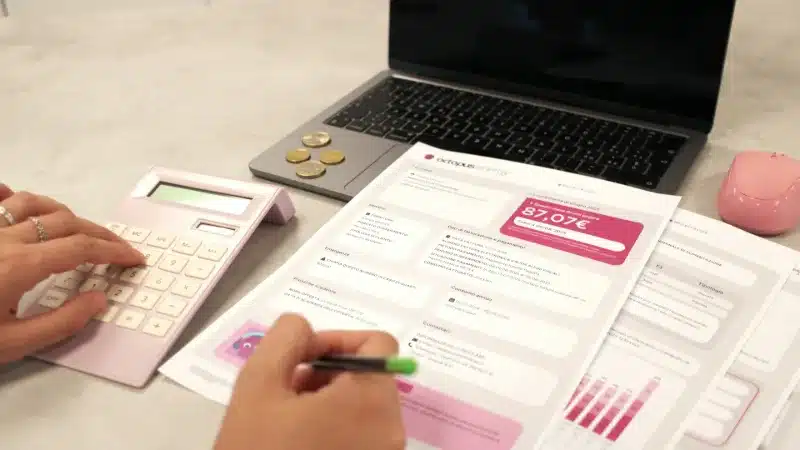
There is no single European framework for employee discounts. Each country decides whether a reduced price or a voucher counts as taxable income, how its value is calculated and which exemptions apply.
For a company with staff in several countries, that means one platform but several sets of rules. Germany and Italy show how far apart those rules can be, and both are worth understanding even if you operate elsewhere, because they illustrate the questions every national system asks.
What follows is general information, not tax advice. The treatment of a specific benefit depends on how it is structured, who pays for it and the facts of each employment relationship.
Before launching or redesigning a program, and whenever you add a funded budget, confirm the design with a tax advisor or your payroll provider in each country where you employ people.
Germany: the staff discount allowance and its conditions
Germany has a specific allowance for staff discounts, known as the Rabattfreibetrag, set out in Section 8 of the German Income Tax Act (EStG). It covers goods or services that the employer does not mainly make, sell or provide for its own employees. In practice, that means what the company sells to the market and also offers to its staff at a reduced price.
The value of the benefit is not simply the discount on the shelf price. It is worked out in steps:
- Start from the end price that the employer, or the nearest supplier, offers to unrelated final consumers in general trade.
- Reduce that price by 4 percent.
- Subtract what the employee actually paid. The remainder is the benefit.
- Add up all such benefits from the employment relationship over the calendar year. Under the current text of the law, they are tax-exempt as long as the total stays within €1,080.
A typical case is a household appliance manufacturer that lets its staff buy its own products. A washing machine has an end price of €1,000 and an employee pays €700 for it. The reference price after the 4 percent reduction is €960. Subtract the €700 paid and the benefit is €260.
If that is the employee’s only purchase of this kind during the year, it sits comfortably inside the €1,080 allowance.
If the same person also buys a refrigerator and a dishwasher on similar terms, the benefits add up, and once the annual total goes past €1,080 the allowance no longer covers all of it. Payroll then has to treat the benefit as taxable income.
Two conditions narrow the scope. First, the 4 percent reduction and the €1,080 allowance do not apply to benefits the employer chooses to tax at a flat rate under Section 40 of the same law.
Second, when the conditions of the staff discount rule are not met, the general rule applies instead: benefits in kind are valued at the usual end prices at the place of delivery, minus customary price discounts.
The same discount can therefore be taxed differently depending on the employer’s line of business. A retailer selling its own goods to staff and a consulting firm offering the same goods through a partner are not in the same position, which is why discounts on third-party products need their own analysis rather than an assumption that the allowance covers them.
Vouchers and cards have a separate rule. Under German law, vouchers and cards that entitle the holder only to goods or services, and that meet the criteria of Section 2(1) no. 10 of the Payment Services Supervision Act (ZAG), are not treated as cash benefits.
Cards that fall outside those criteria do not get that treatment. For any program that loads employer money onto a card or digital wallet, the technical design of the card is a tax question as much as a product question.
Italy: higher thresholds until 2027, with a cliff edge
For 2025, 2026 and 2027, Italy’s 2025 Budget Law raised the tax-free limit for fringe benefits to €1,000 per employee, or €2,000 for employees with dependent children, a derogation set out in Agenzia delle Entrate circular no.
4/E of May 16, 2025. The ordinary limit in the TUIR, Italy’s consolidated income tax code, is €258.23. Planning that extends beyond 2027 should assume the ordinary figure unless the law changes again.
The most important feature of the Italian rule is easy to miss: the threshold is not an allowance. If the annual total goes over the limit, the entire amount becomes taxable, not just the part above it. Consider an employee without children who receives €700 in shopping vouchers during the year, plus €350 in reimbursed electricity and gas bills. The total is €1,050. It exceeds the limit by only €50, yet all €1,050 becomes taxable income.
A program that cannot track each employee’s running total in real time exposes both the company and the employee to that cliff.
What counts toward the limit is also broad. It includes:
- goods and services given to the employee, including those given to the employee’s spouse or relatives;
- goods and services the employee is entitled to obtain from third parties;
- payments or reimbursements of household utilities (water, electricity and natural gas);
- rent on the employee’s main home, or interest on the mortgage for that home.
A voucher budget and a utility bill reimbursement therefore share the same ceiling. When HR and finance run them as separate initiatives, it is surprisingly easy to cross the threshold without anyone noticing until year-end.
The €2,000 limit is not automatic. The employee has to tell the employer that they qualify, giving the tax ID number of each child. A child counts as dependent with income up to €2,840.51, or up to €4,000 if the child is 24 or younger.
In practice, this calls for a simple declaration process, ideally a form inside the same portal where employees use their benefits, so the information reaches payroll without email chains or paper.
Delivery format matters too. Benefits can be grouped into a single legitimation document, which can be electronic, and the Italian tax agency has accepted a named debit card that can only be used at merchants chosen by the company. That gives digital platforms room to work in Italy, provided the card or voucher is configured within those limits.
Spain, Portugal, France and the Netherlands
Each of these countries has its own framework for benefits in kind, with its own thresholds, valuation methods and exemptions. They differ in mechanism as well as in amounts, so the German or Italian figures should never be copied across borders.
A program that is perfectly compliant in Milan can create a payroll issue in Lisbon or Rotterdam if it is rolled out unchanged.
The practical approach is to map each country’s rules with local payroll before launch and to configure the program by country: which offers are visible, whether there is a funded budget, how it is capped and how it is reported.
A platform that only allows one global configuration is a poor fit for a multi-country workforce, whatever the quality of its catalog.
| Aspect | Germany: staff discount allowance | Italy: fringe benefits 2025–2027 |
|---|---|---|
| What it covers | Goods or services the employer does not mainly make, sell or provide for its own staff | Goods and services for the employee and relatives, those obtained from third parties, plus utilities, main-home rent or mortgage interest |
| Annual limit | €1,080 per calendar year | €1,000, or €2,000 with dependent children |
| How the value is calculated | End price to final consumers minus 4 percent, minus what the employee paid | Total value of the benefits received in the year |
| Above the limit | The allowance no longer covers the full benefit | The entire amount becomes taxable |
| Validity | Current text of the law | 2025 to 2027; ordinary limit €258.23 |
| Main exclusions or conditions | Not available for benefits taxed at a flat rate under Section 40 | Higher limit requires the employee’s declaration with each child’s tax ID |
| Vouchers and cards | Not cash if they entitle only to goods or services and meet ZAG criteria | Electronic legitimation documents and named cards limited to selected merchants accepted |
Designing a program people actually use
Once the tax framework is clear, the harder work begins. Most discount programs that fail do so because of low adoption, not compliance problems. People do not use what they cannot find, do not understand or do not find relevant. These are the design decisions that make the most difference.
Start with what people actually spend money on
The best catalogs are built around everyday spending: groceries, fuel and public transport, utilities, children’s needs, health and fitness, and holidays. Luxury brands and one-off gadgets look attractive in a sales demo but get little use. In multi-country companies, local relevance matters even more.
A supermarket chain that dominates in one country may not exist in the next, so the catalog has to be curated by market rather than translated.
A useful exercise before launch is a short pulse survey asking employees where they spend most of their monthly budget. It takes a few days, costs almost nothing and gives you a far better brief for the catalog than any provider’s generic list.
Reach every employee, not just the office

A program designed for laptop users will not reach a warehouse, a hospital ward or a retail floor. For deskless staff, the program has to live on the phone, open without a corporate VPN and use a login people can remember.
Self-registration with a work email or employee number, multilingual content and offline-friendly vouchers all lower the barrier.
Equity matters here as well. If only office staff end up using a benefit that everyone is entitled to, the program can widen the gap it was meant to close. Track adoption by site, team and role from the first month, and act quickly where it lags.
Communicate it like a product, not a policy
A discount nobody knows about does not exist. The launch email is the least effective part of communication.
What sustains usage is a steady rhythm: seasonal offers before school starts or the summer holidays, reminders tied to moments people care about, short stories from colleagues who saved on something useful.
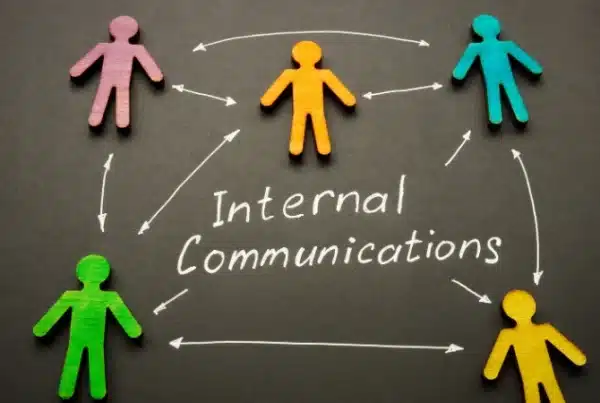
When discounts sit inside the same channel as company news, they get seen every time someone checks an update, which is a strong argument for linking the program to internal communication rather than running it as a standalone site.
Managers also need a role. A team leader who mentions a relevant offer in a weekly meeting does more for adoption than a dozen automated notifications.
One portal instead of five tools
HR teams already juggle payroll systems, learning platforms, surveys, recognition tools and intranets. Adding a separate discount portal with its own login, its own updates and its own support requests rarely helps. Employees feel the fragmentation too: every extra password reduces the chance they will come back.
Our preference is to centralize benefits, discounts, recognition and communication in a single employee portal wherever possible. It reduces the manual work of keeping several tools current and gives people one place to go.
The trade-off is dependence on a single provider, so check data export options, contract terms and how easily the portal integrates with your existing HR systems before committing.
Measure, then adjust
A discount program should come with dashboards that show registration, active use, the most used categories and differences by site or country. Usage data tells you what people value far more reliably than satisfaction scores alone.
Combine it with short pulse surveys every few months and you can retire offers nobody uses, negotiate better terms in popular categories and spot groups that are not being reached.
In countries with thresholds like Italy’s, the same reporting has a compliance role: tracking each employee’s running total against the annual limit and warning before the cliff is reached.
Common objections, and when a program is not the right move
Most of the doubts HR and finance leaders raise about discount programs are reasonable. Here is how we respond to the ones that come up most often.
“Our people won’t use it.” Adoption depends far more on relevance and communication than on the size of the discounts.
A catalog built around real spending, accessible from a phone and promoted regularly tends to find its audience. A catalog launched with one email and never mentioned again tends not to, no matter how generous it is.
“It’s one more tool for HR to manage.” That is a fair concern, and it depends on the provider. With a managed platform, the provider negotiates and updates offers, handles merchant relationships and runs technical support.
HR’s job becomes choosing what to highlight and reading the data. If a proposal expects your team to maintain the catalog manually, keep looking.
“We can’t justify the cost.” A pure discount model, where employees pay reduced prices, usually costs the platform fee and little else. A funded budget is a separate decision with a separate business case.
Before signing, model the expected cost against staff turnover: replacing an employee carries recruitment, onboarding and lost productivity costs that most companies underestimate, and even a small reduction in turnover can change the calculation. Use your own turnover and salary data rather than market averages.
“Isn’t this just a perk that doesn’t change anything?” On its own, often yes. Discounts work best as one visible piece of a wider employee experience that also includes recognition, clear communication and listening. Treated as a box to tick, they deliver little.
There are also situations where we would not recommend a full platform. A small team in a single location may get more value from three or four well-chosen local agreements managed by email. A company in the middle of a pay dispute should resolve pay first.
An organization with nobody to own the program, communicate it and read its data will likely see it fade within months. In those cases it makes more sense to wait.
Interested in finding out how we can help you retain talent in your company?
A checklist before you launch
Whether you are starting from scratch or replacing an existing scheme, these are the steps that prevent most problems later:
- Decide whether you are offering savings, value or both, and define the budget for each.
- Map the tax treatment in every country where you employ people, with local payroll or a tax advisor, including the treatment of vouchers and cards.
- Set up tracking for any annual limits per employee, and for Italy, a declaration process for the higher threshold.
- Survey employees on where they spend, and curate the catalog by country.
- Confirm that every group can access the program: mobile, languages, login method, sites without corporate devices.
- Connect the program to internal communication and plan the first six months of reminders and seasonal campaigns.
- Brief managers on what the program offers and how to mention it.
- Agree the metrics you will review each quarter and who owns them.
- Check data protection, data export and integration with your HR systems in the contract.
The timeline for a branded platform with a curated catalog depends on integrations and the number of countries involved. The tax mapping and the communication plan can take longer than the technical setup, so start them first.
Discounts as part of a wider engagement strategy
Employee discounts become more valuable when they connect to the rest of the engagement program.
Recognition is the clearest example. When a manager or a colleague thanks someone for a job well done, a reward redeemable in the same catalog turns a gesture into something tangible, without HR having to buy and ship gifts.
Commercial teams work the same way: sales incentives based on points that can be exchanged for products, experiences or vouchers tend to feel more personal than a cash bonus that disappears into a monthly payslip.
The same infrastructure can also face outward. Some companies use a similar catalog of benefits to reward loyal customers or distribution partners, building loyalty with the same logic they apply internally.
And when discounts, recognition, surveys and company news share one portal, the data starts to tell a more complete story: which teams engage, which benefits matter and where the employee experience needs attention.
At Vip District by Epassi we offer Vip Savings, our employee discount solution, as part of an all-in-one employee engagement platform that also brings together Vip Connect for 360º internal communication and Vip Pulse for listening to employees.
Each platform is personalized with the company’s own brand, and our ROI and turnover rate calculators help you build the business case with your own figures before you decide.
The decision you face is whether to keep discounts as a scattered perk or turn them into a branded, measurable program that every employee can reach and that fits the tax rules of each country where you operate.
If the second option makes sense for your company, the most useful next step is to see how it would look with your brand, your countries and your workforce, and you can book a walkthrough of the platform with our team to compare it against what you have today.
Want to know more? Reach out or speak with your account manager.